Using Driver Licence OCR to Improve Digital Identity Workflows
Driver Licence OCR can turn information from licence images into structured data, helping businesses reduce manual entry and build more efficient identity-related workflows.
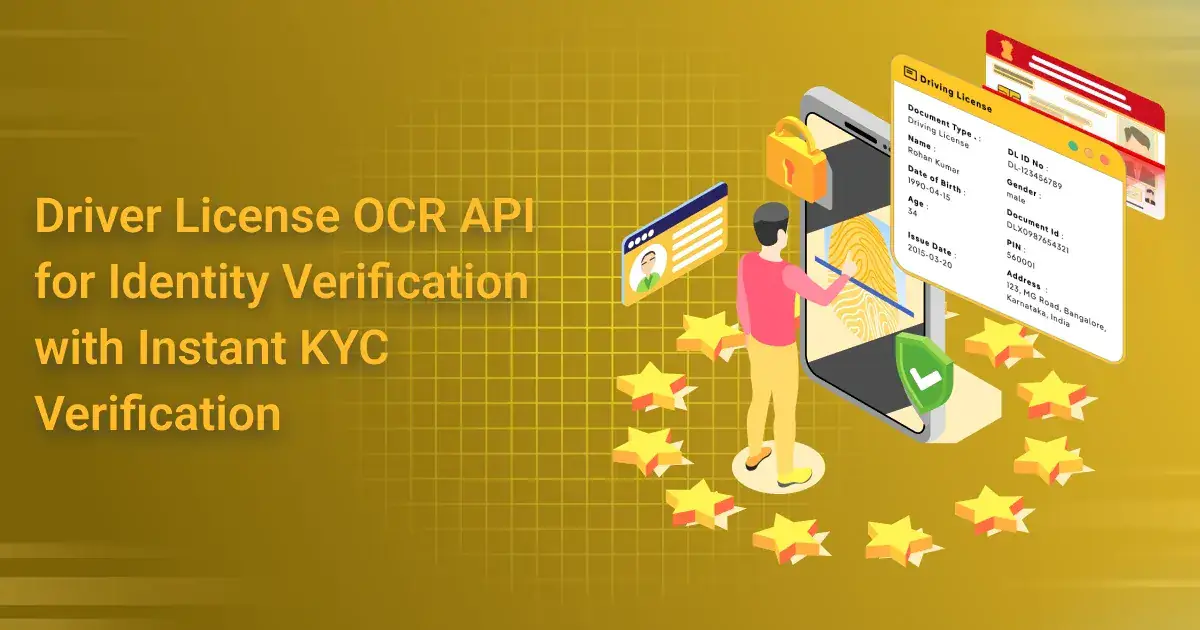
Digital identity workflows often begin with something very simple: asking a user to provide an identity document.
The difficult part comes afterward.
When a driver licence is uploaded as an image or scan, the information inside that document is not immediately available as structured data. Someone may need to read the document and manually enter details into another system. At a small scale this may seem manageable, but repetitive document entry becomes increasingly inefficient as the number of users grows.
This is one area where Optical Character Recognition, commonly known as OCR, can be useful.
What Driver Licence OCR Does
Driver Licence OCR is designed to recognize text and information contained in a licence image and convert it into machine-readable data.
Instead of treating the uploaded licence as just an image, an OCR system can identify relevant fields such as:
Name
Address
Licence number
Date of birth
Expiration date
The extracted information can then be passed to another part of an application or stored as structured records.
This creates a bridge between a physical or image-based document and a digital workflow.
Reducing Repetitive Data Entry
One of the simplest benefits of OCR is reducing the amount of information users or employees have to type manually.
Consider a digital onboarding form. Without document extraction, a user might upload a licence and then enter their name, address, licence number, and other information separately.
With OCR, the process can instead look like:
Upload licence → Extract information → Populate relevant fields → Continue onboarding
This can make the process more convenient for users while also reducing opportunities for transcription mistakes.
Where Driver Licence OCR Can Be Used
The technology can fit into different types of applications.
Car rental services can use extracted licence information when creating customer records.
Insurance platforms may incorporate document extraction into registration or customer onboarding workflows.
Banking and financial applications can use OCR as one component of broader identity-related processes.
It can also support general document management where businesses need to convert information from licences into digital records.
OCR Is Not the Same as Verification
An important distinction is often overlooked when discussing document automation.
OCR extracts information. Verification is a separate process.
For example, an application might first use OCR to obtain a licence number and expiration date. Additional verification logic can then determine whether the document and extracted information satisfy the application's requirements.
This separation allows developers to treat document extraction as one stage within a larger identity workflow rather than expecting OCR alone to establish someone's identity.
Why an API Approach Can Be Practical
Building document recognition internally can require several components, from image processing and text recognition to field detection and structured output.
An API provides another approach.
A development team can send a document image to an OCR service, receive the extracted information, and connect that result with its existing application.
AZAPI's Driving Licence OCR API follows this approach, allowing applications to process driving licence images and extract information such as names, addresses, licence numbers, and expiration dates. The service is positioned for onboarding, identity-related workflows, compliance, and record management.
Image Quality Still Matters
Automation does not remove the importance of the original document image.
Blurry photographs, glare, poor lighting, or an incorrectly positioned document can make text recognition more difficult. For that reason, applications using OCR can benefit from giving users simple instructions for capturing clear document images.
Good input quality can contribute to a more reliable document-processing workflow.
Building a Better Identity Workflow
Driver Licence OCR is most useful when it is treated as part of a larger system.
A practical workflow could combine document upload, OCR extraction, application-level validation, and any required verification steps. Each stage has a different purpose.
The result is not simply faster text recognition. It is a workflow where information from a document can move into digital systems with less repetitive manual work.
For businesses handling many identity documents, this can make onboarding and record management easier to scale.
Conclusion
Driver Licence OCR provides a practical way to convert information locked inside document images into structured digital data.
Its value comes from more than simply recognizing text. When integrated into an application, OCR can reduce repetitive data entry, support digital onboarding, and provide useful information for downstream identity-related processes.
The key is to use OCR for what it does best-extracting document information-while keeping verification and other validation processes as separate parts of the overall workflow.
Learn more:
https://azapi.ai/services/ocr/driving-licence-ocr-api/
Publication Review Code
TECH-07092026-FDE9D9
✓ Verify
Peer Review
Authors with 10+ approved publications in Technology can rate this article as Valid or Tidak Valid. Each valid rating from a qualified reviewer adds points toward this article's community badge.
Enter your email to verify your reviewer eligibility for this category.
Published on Onesty — a research & publishing platform by Ruswanda Clarck. Part of a verified professional network: ruswanda.my.id · hikcctvmedan.com · onesty.my.id